.png)
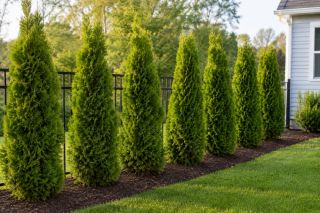
If you're planting American Pillar arborvitae for privacy, choosing the right spacing is just as important as choosing the right tree.
Plant them too close together and they'll compete for sunlight, water, and nutrients as they mature. Space them too far apart and you'll wait longer than necessary for your privacy screen to fill in.
Fortunately, getting the spacing right is straightforward—and it will help your hedge stay healthier and look better for years to come.
The Short Answer
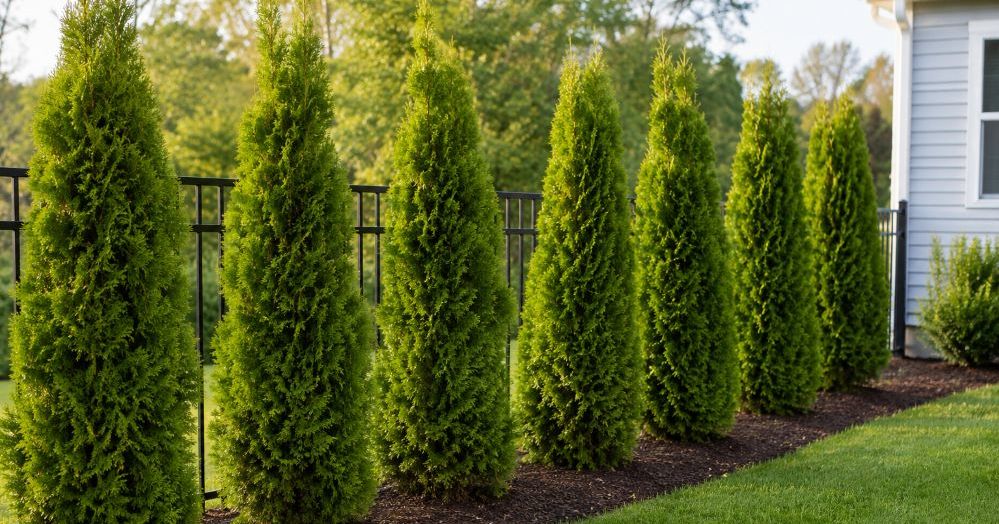
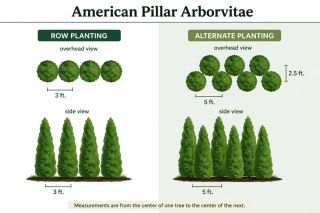
For most privacy screens, we recommend planting American Pillar arborvitae 2½ to 3 feet apart, measured from the center of one trunk to the center of the next.
A single row is the most common installation because it creates an attractive, space-efficient privacy hedge that will naturally grow together over time. Curious how much space they'll eventually occupy? Learn how wide American Pillar arborvitae gets before you plant.
For homeowners who want an even denser screen—or are screening a larger area—an alternate or staggered planting pattern can also be an excellent option.
Why You Shouldn't Plant Them Too Close Together
When homeowners are eager for privacy, it's tempting to plant trees as close together as possible. In most cases, though, closer isn't better.
Trees planted too tightly compete for the same resources. Reduced airflow between the trees can also increase moisture retention within the hedge, making routine maintenance more difficult over time.
While the screen may appear to fill in slightly faster during the first few years, excessively tight spacing rarely provides a long-term advantage.
Why You Shouldn't Plant Them Too Far Apart
Spacing trees too widely creates the opposite problem.
Instead of forming a continuous screen, you'll have visible gaps between the trees for much longer. Many homeowners end up wishing they had planted an additional tree or chosen a tighter layout from the beginning.
Proper spacing helps your investment provide privacy sooner without overcrowding the planting.
Single Row vs. Alternate Planting
Most homeowners choose a single row, spacing trees about 3 feet apart. This creates an attractive privacy hedge while using fewer trees and taking up less yard space.
For larger properties or homeowners who want the fullest possible screen, a staggered planting uses two offset rows.
In a staggered layout:
- Trees remain about 2½ feet apart within each row
- The rows themselves are spaced about 5 feet apart
- Each tree is positioned between two trees in the opposite row rather than directly across from them
This creates a thicker hedge with fewer sightlines through the planting, especially while the trees are still maturing.
A staggered design also produces a more natural-looking evergreen screen than planting two perfectly parallel rows.
The tradeoff is simple: you'll need more trees, more planting space, and a larger investment upfront.
Why American Pillar Is Ideal for Narrow Spaces
One of the biggest advantages of American Pillar arborvitae is its naturally narrow, upright habit.
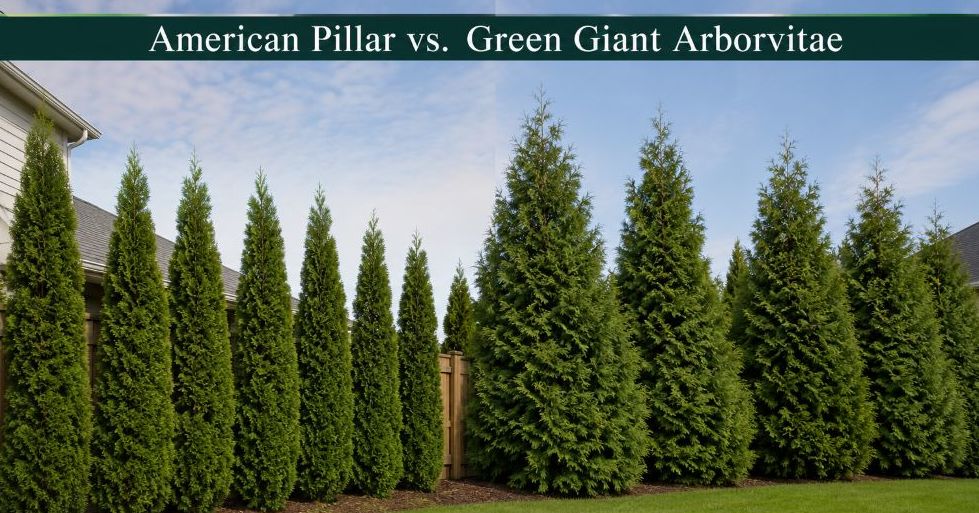
Unlike larger arborvitae varieties, American Pillar typically matures at about 15 to 20 feet tall while remaining only 3 to 4 feet wide . That makes it an excellent choice for:
- Side yards
- Property lines
- Pool areas
- Patios
- Fences
- Newer developments with smaller lots
Many homeowners choose American Pillar specifically because they don't have enough room for a much wider evergreen hedge.
How Long Does It Take to Fill In?
Every landscape is different, so there's no single timeline.
How quickly your hedge fills in depends on several factors, including:
- The size of the trees when they're planted
- Sunlight exposure
- Soil conditions
- Consistent watering
- Overall tree health
Healthy trees planted at the proper spacing will naturally knit together over time, creating a full, attractive privacy screen without feeling overcrowded.
How Does This Compare to Green Giant Arborvitae?
Green Giant arborvitae requires considerably more space because it grows much wider at maturity.
If you have a large property, Green Giant is often an excellent choice. If you're working with limited planting space, American Pillar usually provides the better fit without sacrificing privacy.
If you're still deciding between the two, read our guide to American Pillar vs. Green Giant Arborvitae to compare their size, spacing, cost, and best uses.
Common Planting Mistakes
A few simple mistakes can affect how your hedge performs years down the road.
When planting American Pillars, avoid:
- Measuring from the edges of the root balls instead of the centers of the trunks
- Planting too close to fences or buildings
- Forgetting to account for mature width
- Ignoring overhead utility lines or nearby structures
- Assuming every property should use the exact same layout
Every landscape has its own constraints, and slight adjustments to spacing can make a big difference.
Let Us Help Design the Right Privacy Screen
The ideal spacing—and even the ideal planting pattern—depends on your property, your privacy goals, and how quickly you'd like your hedge to mature.
At Rolling Fields Tree Farm, we'll help you determine whether a traditional single row or a staggered planting makes the most sense for your space. We'll also recommend the proper spacing and number of trees so your privacy screen looks great both now and years down the road.