How often should I water my newly installed trees?
We generally supply a watering system with your installation if you are purchasing more than 10-trees at once. The root balls of the field grown trees should be fully saturated with water once per week from approximately May through October depending on your frost dates. The root balls of containerized trees should be fully saturated 2-3 times per week depending on the temperature and soil type during the growing season outlined above.
While our watering system is generally fool proof and is intended to be a “permanent” system, it must be closely monitored on watering days to ensure that the trees are receiving an adequate amount of water. Once the trees and watering system are in your possession, you are solely responsible for them. We are always here to help with additional questions or concerns.
What does the irrigation system include and how does it work?
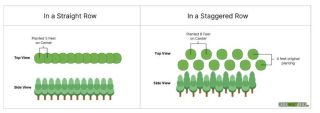
The irrigation system includes one water time attached to a standard 3/4” hose bib. In addition to the timer, tubing and emitters are installed under the trees assuming the trees are in close proximity to one another (5’-8’). We do not supply a connection pipe or hose from the water source to the piping under the trees or from one area of trees to another. The optimal situation would be to have a stand pipe to supply the water on a separate zone. In most cases a standard garden hose completes the connection from the timer to the piping under the trees. We do not supply the connection hose - we only supply the timer, piping under the trees, and 2-gph emitters. The water supply stays on during the growing season (April - November) containerized trees are thoroughly watered twice per week and field grown trees are thoroughly watered once per week during dry conditions. If the trees are receiving sufficient water from rain events, the additional water may not be needed.
The provided timer cannot be exposed to freezing temperatures. We recommend turning water supply off and bringing timer indoors in early November and re-connecting late April. Refer to the first guidelines pertaining to your specific area for more accurate guidelines.
Do you have American Pillar seedlings?
No. We sell larger, balled & burlapped trees that provide immediate landscape impact and establish quickly.
Do you sell American Pillar seeds?
No. Seeds are not an effective way to create a uniform hedge or privacy screen. We supply only established trees for best results.
When is the best time to prune American Pillar Arborvitae?
Minimal pruning is needed. If shaping is desired, prune in late spring or early summer after new growth has emerged. Avoid cutting back into old wood.
What type of soil does American Pillar need?
It grows best in well-drained soils rich in organic matter but adapts to a variety of soil types. Avoid sites with consistently soggy ground.
Can American Pillar grow in acidic soil?
Yes. It tolerates acidic soils (below 6.0) and neutral soils (6.0–8.0).
Will you plant the trees for me?
Yes. We offer professional installation within 50 miles of our farm in Galena, MD, and for orders of 10 or more trees, we include an irrigation system to ensure proper watering during establishment.
How big does American Pillar get?
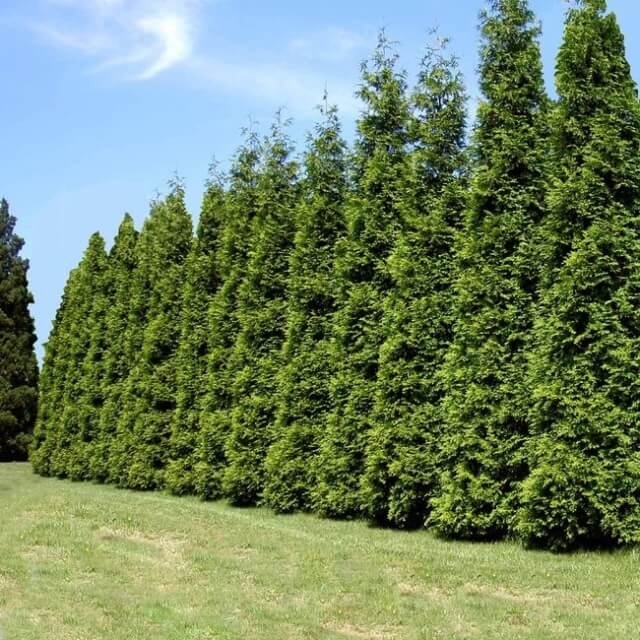
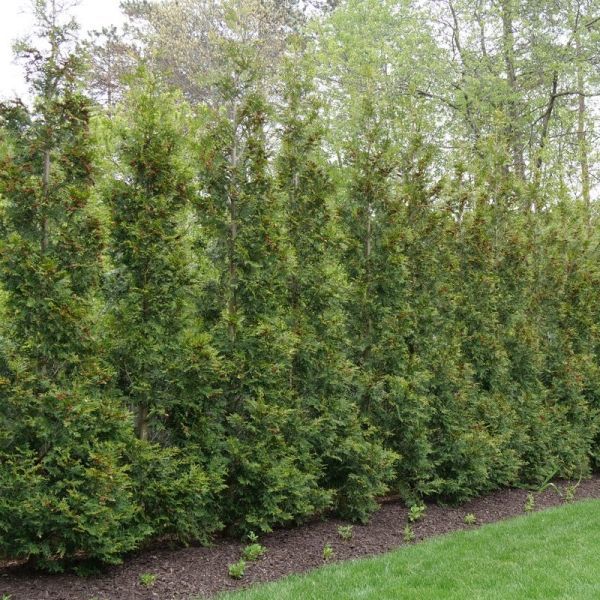
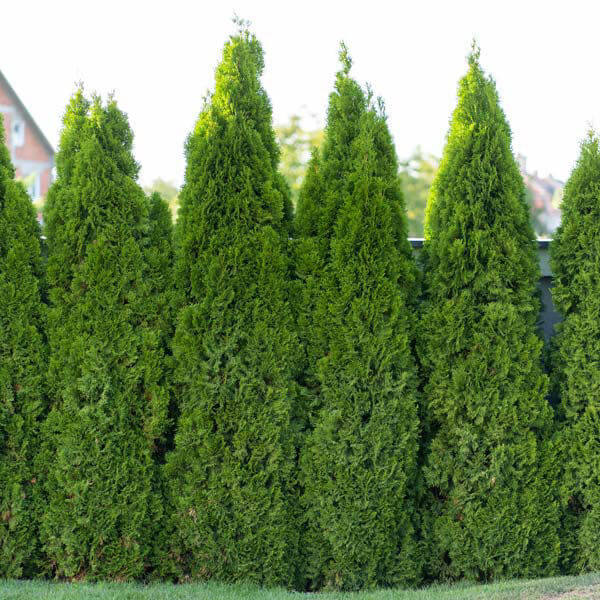
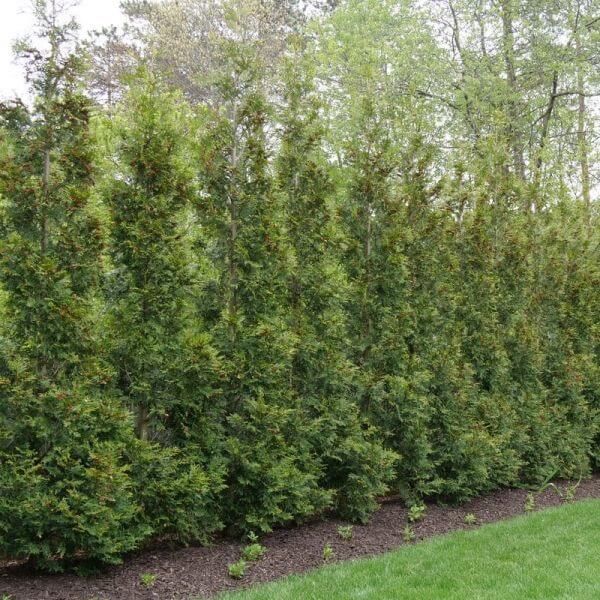
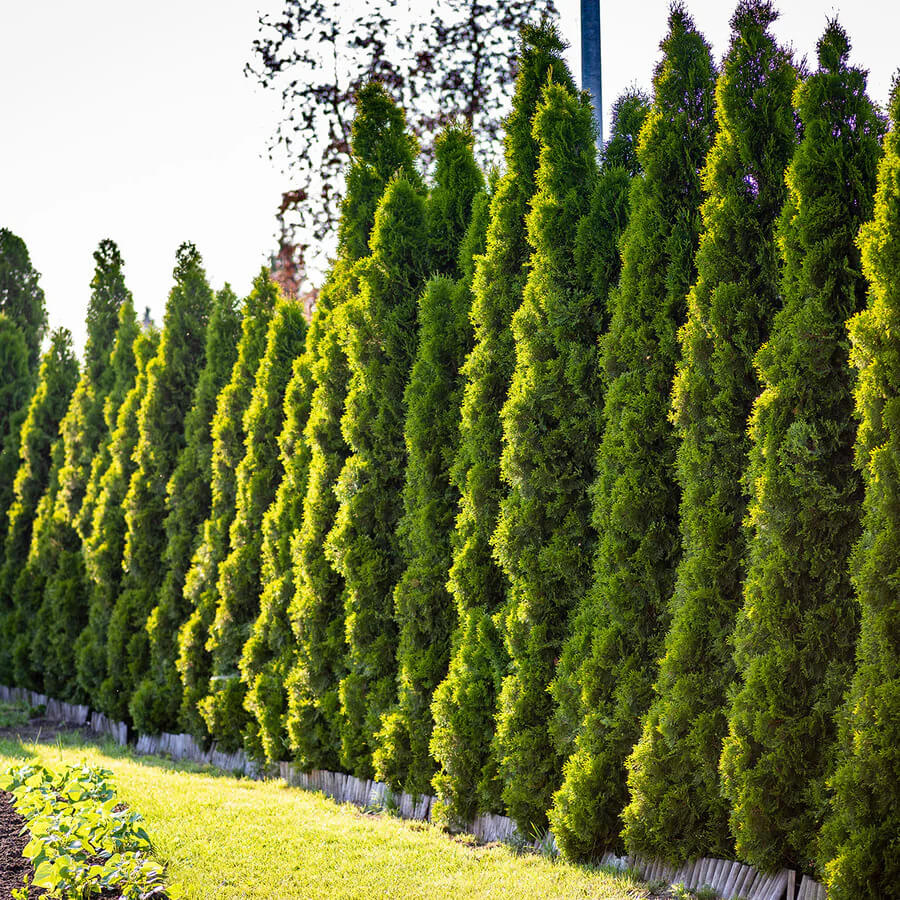
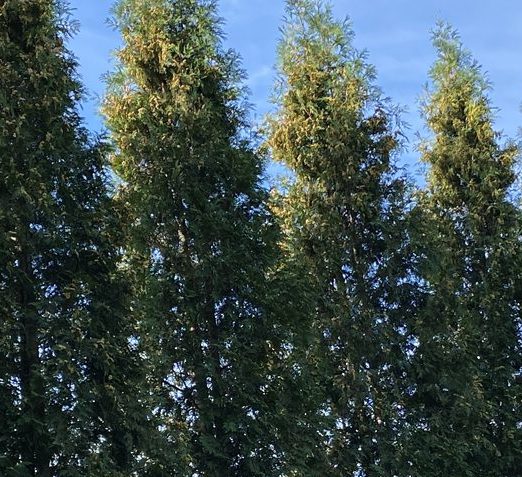
It typically reaches 15–20 feet tall and 3–4 feet wide at maturity.
Can American Pillar grow in rocky soil?
Yes, provided there is good drainage and the planting site is not compacted or waterlogged.
American Pillar vs. Green Giant — Which should I choose?
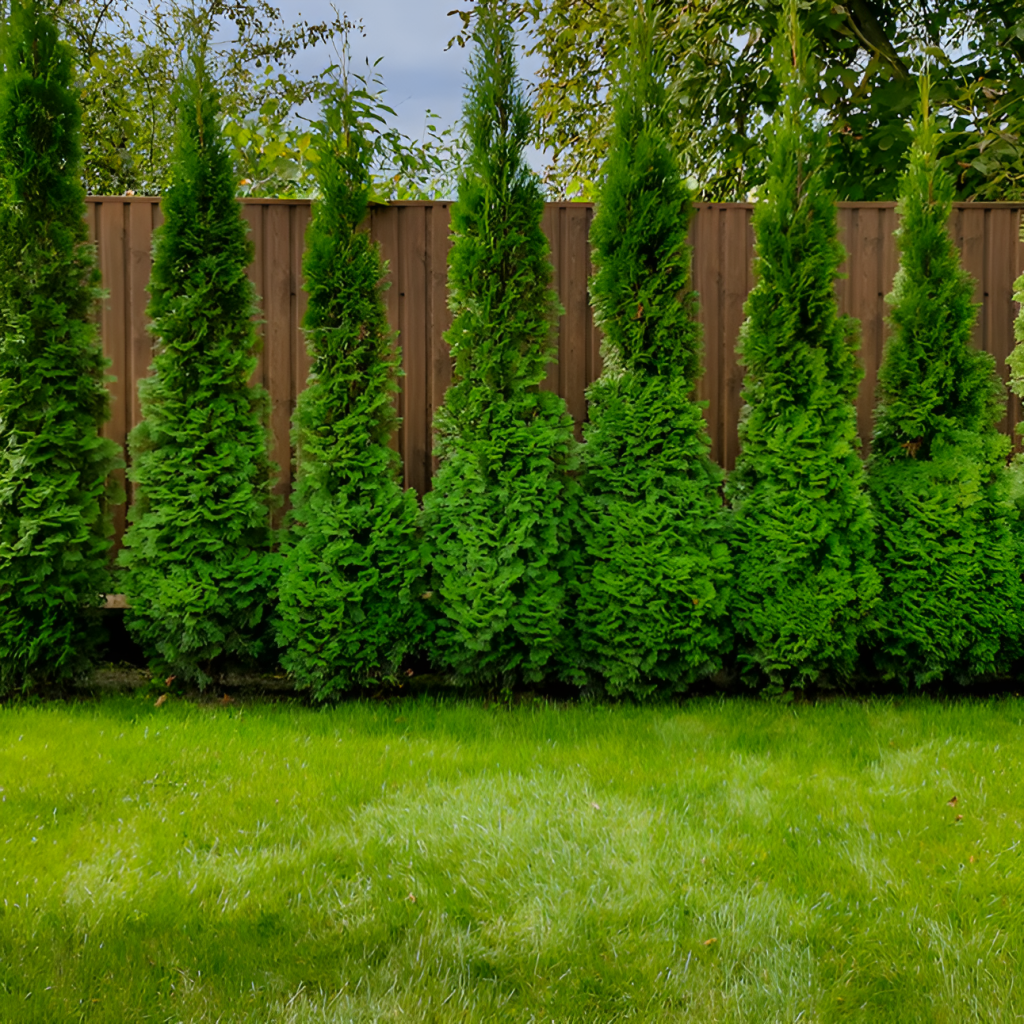
Choose American Pillar if you want a tall, narrow screen that fits into tight spaces or formal designs. Choose Green Giant if you need the widest, tallest living barrier possible. Both grow quickly and resist pests, deer, and most diseases.
How fast does American Pillar Arborvitae grow?
American Pillar can grow up to 2–3 feet per year under the right conditions, similar to Green Giant in its early years. Its columnar shape means it fills in vertically without taking up much horizontal space.
What's the difference between American Pillar and Green Giant Arborvitae?
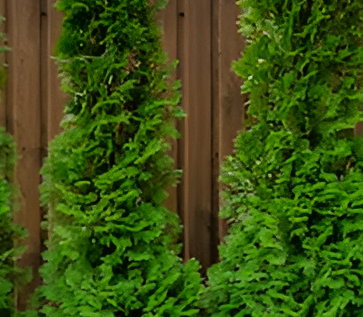
Both are hardy, fast-growing evergreens, but American Pillar is much narrower, only 3–4 feet wide at maturity, compared to the Green Giant's 12–15 feet. It's designed for tight spaces, formal hedges, and urban yards where a wide spread isn't practical.
Is American Pillar Arborvitae a Thuja?
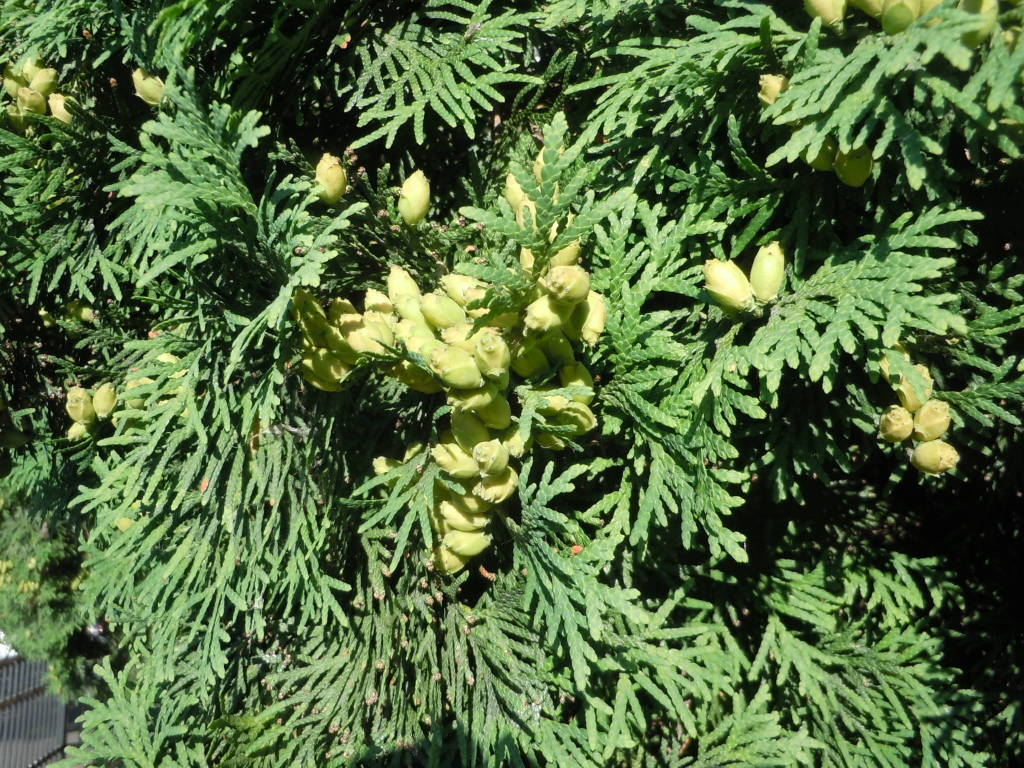
Yes. American Pillar is a cultivar of Thuja occidentalis, also known as Eastern Arborvitae, specifically selected for its tall, narrow growth habit.
.png)